
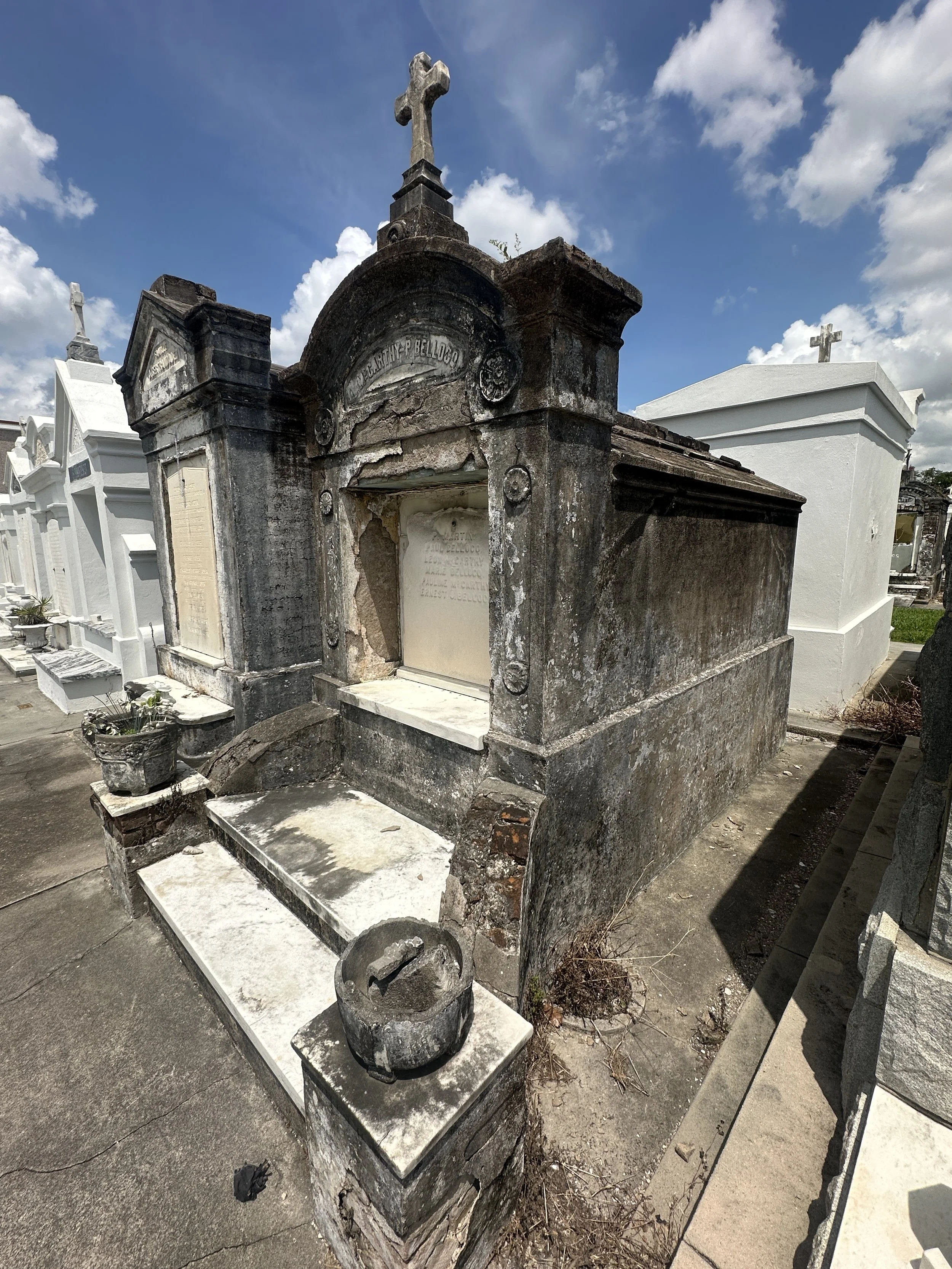
● Currently Restoring - The Bellocq Tomb
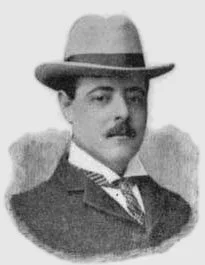
Born into a wealthy French Creole family in 1873, Ernest Bellocq has been chronicled in fantastical terms as a kooky, hunchbacked, misshapen dwarf, who walked like a duck and spoke with a high-pitched French accent likened to an “angry squirrel” who wandered the streets of New Orleans with his Bantam Special camera. Regardless of what he may or may not have looked like, most who knew Bellocq as an adult said he was rarely without a camera. However, most stated that they had no idea what this misfit character was really photographing.
In 1891, Bellocq joined the New Orleans Camera Club, an amateur photographers’ organization, and was soon all aspects of the city’s culture like boxing matches, first communions of orphaned children, and grand homes. Bellocq also worked as a commercial photographer; he was known for his clean, realistic style. While he tried to capture the souls of his subjects, his younger brother Leon tried to save them as a Jesuit priest.
Bellocq died in 1949 with New Orleans hardly pausing for his passing. In 1966, photographer Lee Friedlander purchased eighty-nine of Bellocq’s eight- by ten-inch glass plate negatives from local art gallery owner Larry Borenstein, who had discovered the prints in Bellocq’s drawer after his death.
Ernest Bellocq (1874-1949)
● A Story in Photographs
A sensual Opulence
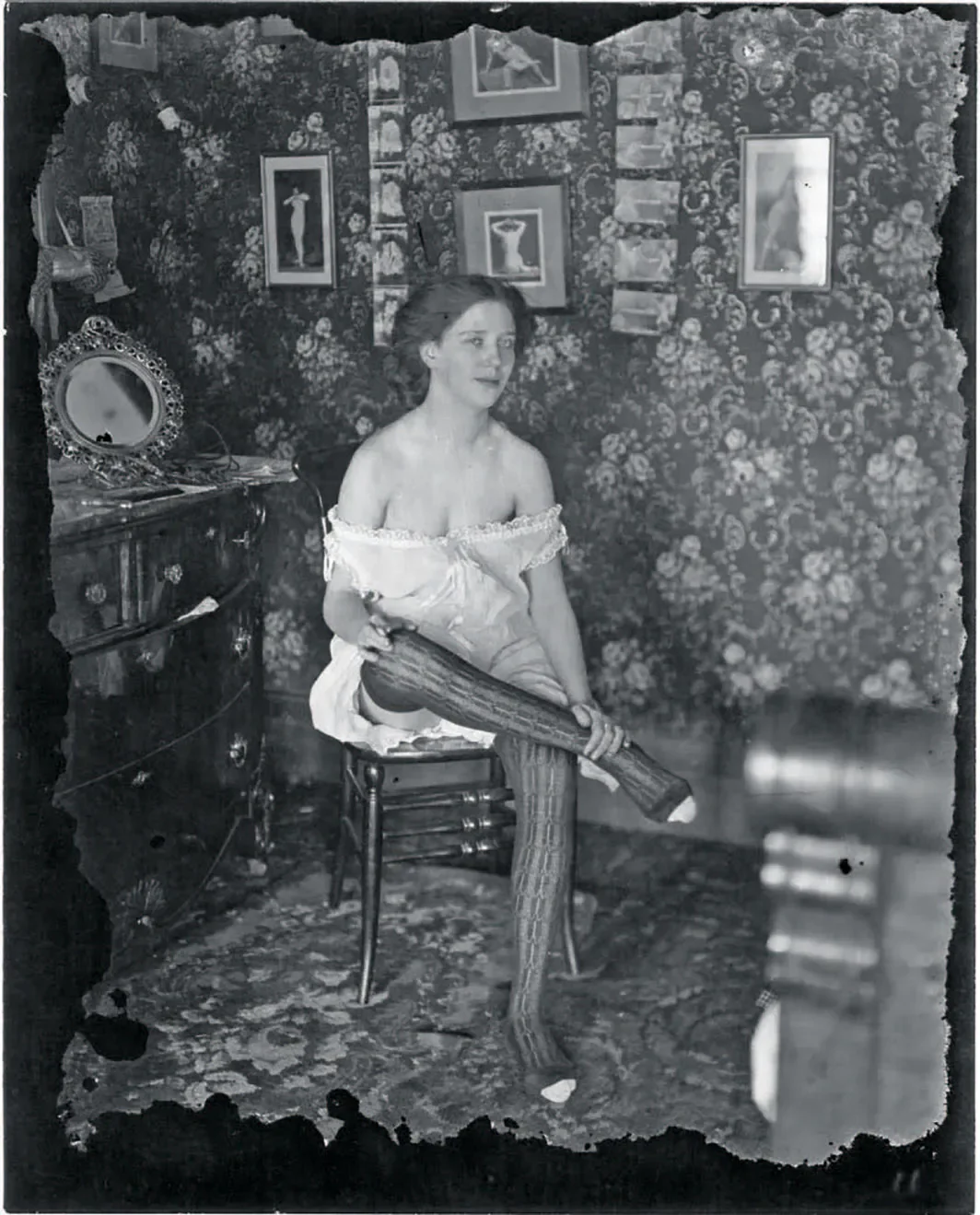
The photographs were of prostitutes in New Orleans’s red-light district, Storyville, circa 1912, and showed women in various stages of dress and undress. Bellocq’s images are remarkable because they were a rare documentation of the lifestyles of early twentieth-century “wicked” and marginalized women.
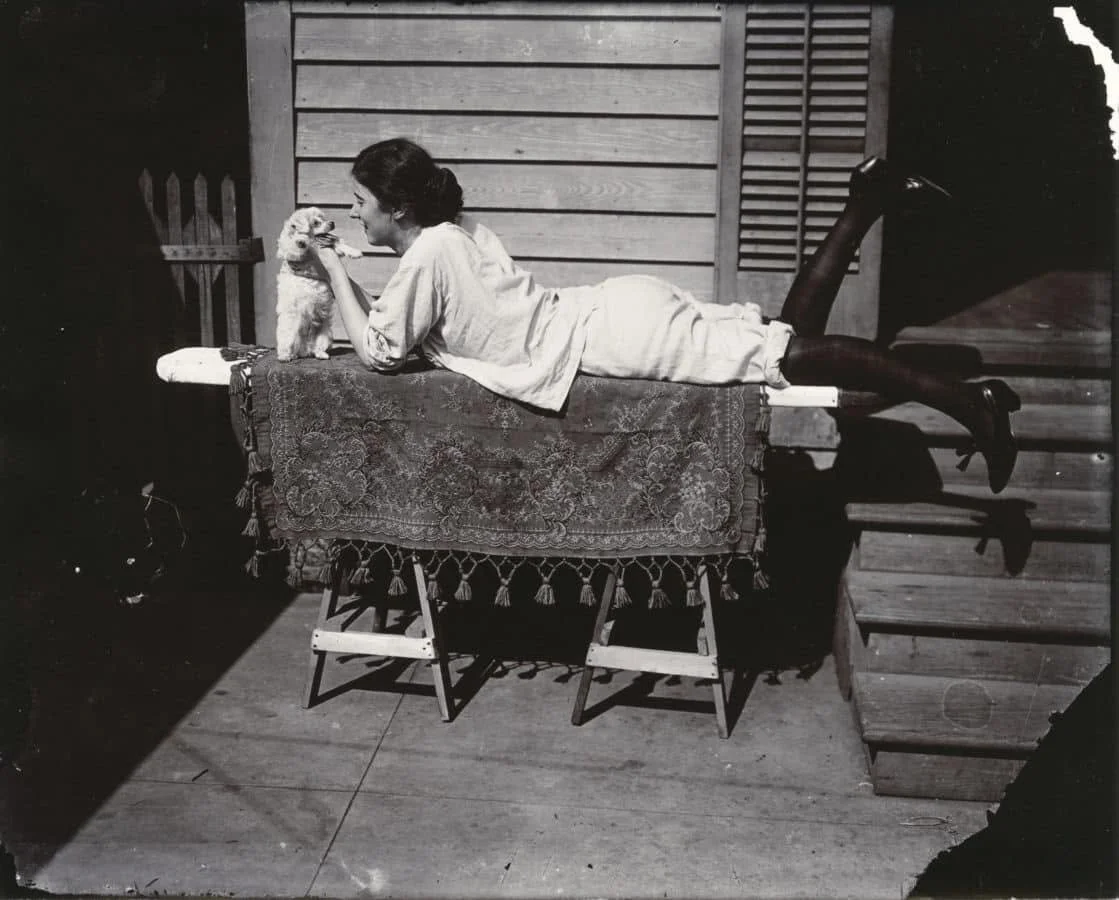
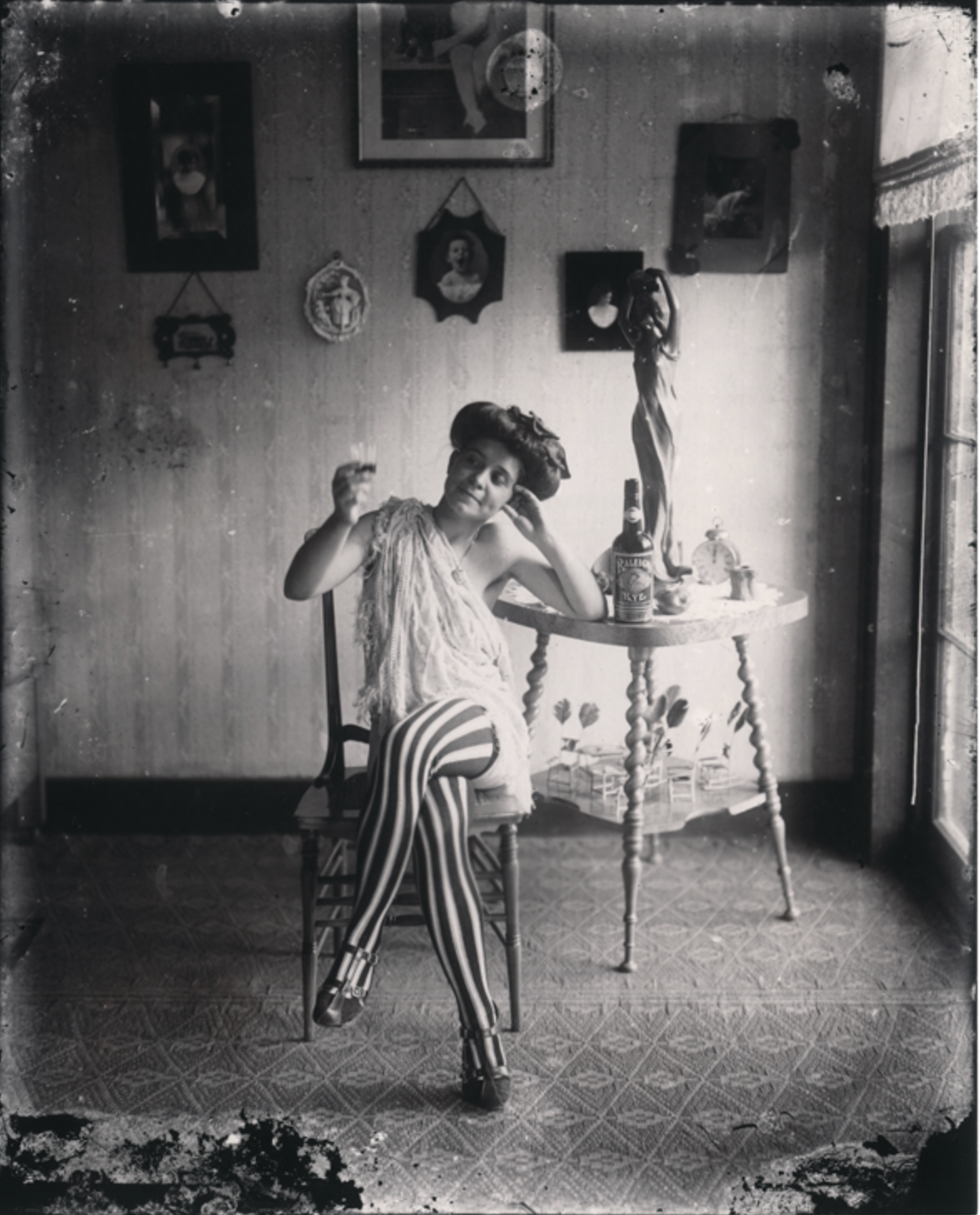
They weren’t overtly salacious. Some enjoyed cards, others played with their dogs, some exhibited their material finery, while others were strictly exhibitionists. Clothed and unclothed, the women blithely lolled on divans, stood erect in backyards against a simple backdrop, and posed on parlor chairs. One woman casually lays naked across a settee with a radiant smile. Another sits demurely in a casual white dress wearing a pearl necklace while lightly clasping her hands as she looks speculatively off in the distance.
The photographs also allowed for view into the blasé, sensual opulence of their places of employment. Some were defiantly sexual while others depicted an almost innocent modesty and elegance. Expanding the mystery of these unidentified women, many of their faces were scratched out. At first, some historians believed that Bellocq’s pious brother was responsible, but most argue that if that were the case the priest would have opted for complete destruction, and the scratching of the negatives appears random. It is believed that they were scratched out when the plates were wet meaning it was probably Bellocq’s doing, which only adds to the mystery.
● As Lascivious as a Dog Food Ad
A Kind of Toulouse-Lautrec
In 1970, the Museum of Modern Art in New York debuted thirty-four of Bellocq’s prints and published a book of his work. Photography critic A.D. Coleman of the New York Times marveled how the photos had “no cheesecake, no guile, no feigned seductiveness”; instead, they were straightforward portraits of women who just happened to be prostitutes.
Some modern critics refer to Bellocq as a kind of Toulouse-Lautrec with a camera, but almost all critics generally agreed that Bellocq was extraordinary for photographing these women as “real” and not sexual objects, something they noted that was still a difficult feat over sixty years later. The National Organization of Women (NOW), however, did not agree, and when the exhibit came to the University of California campus in Berkeley two years later, the group protested that the photographs perpetuated exploitation and degradation of women.
Museum official Bonnie Baskin defended the exhibit, stating that the photographs were about “as lascivious as a dog food ad.” Eventually, Baskin reached a compromise with NOW, agreeing to post their protest letter next to the exhibit and close the display on International Women’s Day. In 1996, another book of his photographs were published with an introduction by Susan Sontag who wrote that Bellocq’s work elevated the sex worker instead of exploiting them. Louisiana Tech University in Ruston, Louisiana has a photography gallery named in his honor.
●An Unconscious Mutual Recognition
A Modest Family Tomb
Whatever Bellocq’s intentions were, he provided a singular view (both literally and figuratively) into their complex lives with his sensitive but realistic portraits. These are not passive and spiritless nudes which were so common during the turn of the century. Those who knew Bellocq surmised that the women must have trusted the photographer in order to pose for their candid photographs.
Perhaps it was an unconscious mutual recognition—prostitute and photographer both recognizing each other as existing on the margins of social acceptance. The only way they could each portray themselves as they wanted was for one outcast to step in front of the camera and the other to step behind it. Although clearly staged, the photographs are a masterful representation of human emotion without exploiting or invading their privacy.
Bellocq’s modest family tomb faces the direction of the New Orleans Museum of Art, less than a half mile away, where some of his photographs are part of the permanent collection, allowing the women of Storyville and their photographer to be seen and remembered but not necessarily understood.
We are grateful to have as sponsors for this tomb the Storyville Museum and the Anne Rice Vampire Lestat Fan Club.